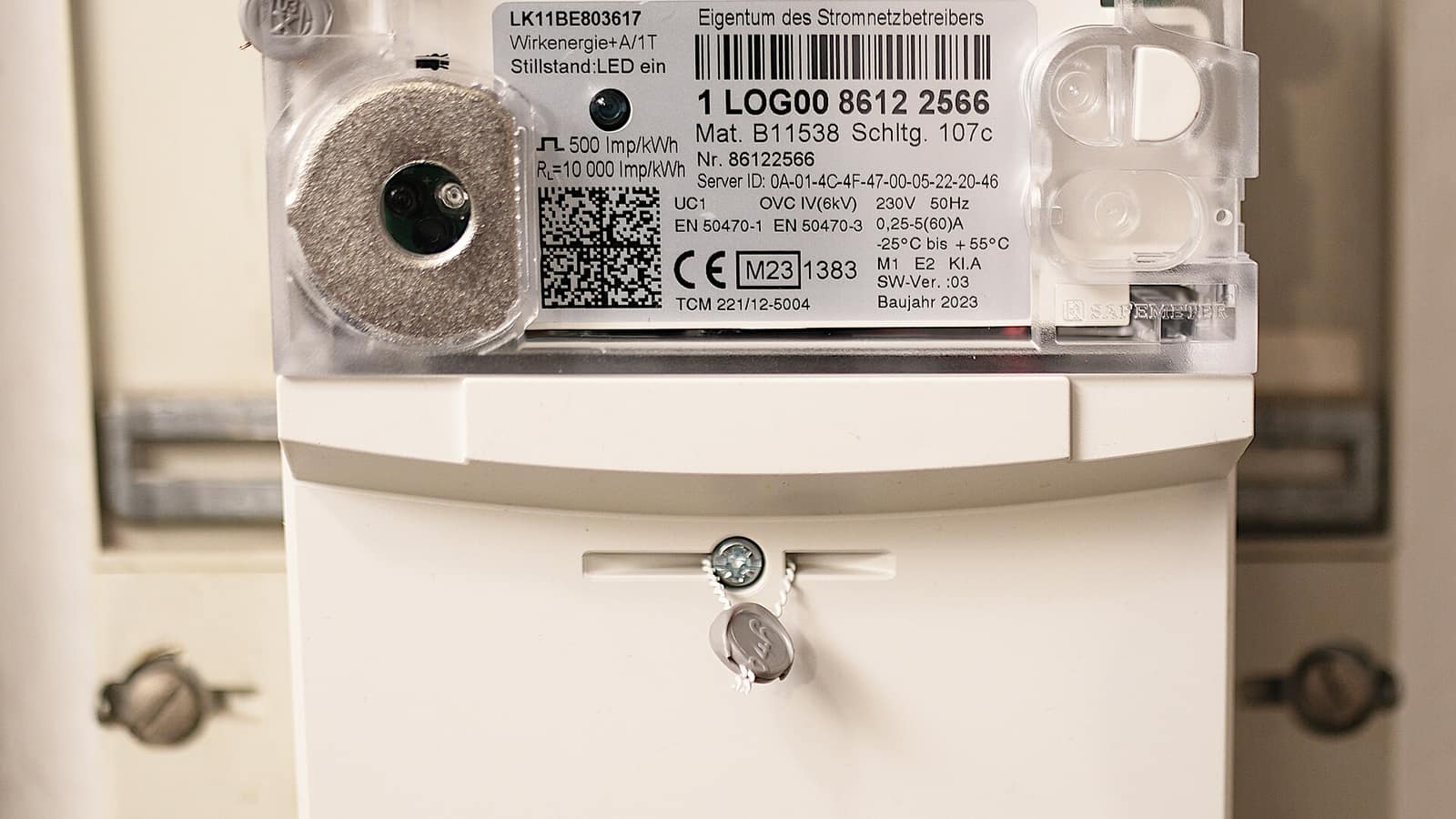

Suppliers in the UK have been offering smart meters since the mid 2010s, and most households with a traditional meter have now been invited to upgrade at least once. The decision is not as simple as the advertising suggests, and it is not as risky as the critics suggest either. Here is a realistic look at what changes when you accept a smart meter — and what does not.
What a smart meter actually is
A smart meter is a conventional kWh meter with a cellular radio. It records your usage the same way an old meter does, and it sends that record to your supplier automatically, typically once a month on the default setting, or every half hour if you give consent. An in-home display (IHD) comes with the install: a small screen that shows live usage in both kWh and pence, so you can see what is costing you money as you use it.
Ofgem’s page on smart meters is the official description of what the device is and what it does.
What changes for a household
Four things change in practice:
- No manual readings. The meter does it. If you have spent years on quarterly estimates with an annual catch-up, that pattern ends.
- Live cost on the counter. The IHD shows what you are using in real time. For many households this is the single most useful feature; watching the number jump when the kettle goes on changes habits without any lectures.
- Time-of-use tariffs become possible. With half-hourly data, suppliers can offer tariffs with cheap off-peak windows for charging an electric car, running a dishwasher overnight, or heating water on a timer. These tariffs are not inherently cheaper for everyone; they are cheaper for households that can shift significant usage into the cheap window.
- Prepayment stops meaning top-up cards. If you are on a prepayment meter, a smart install lets you top up by app or in a shop with a barcode rather than a physical key. If you are not on prepayment, this does not apply.
What does not change
Several things that worry readers do not, in fact, change:
- Your tariff. A smart meter does not move you onto a worse tariff. You stay on the same tariff you had the day before. If you want a time-of-use tariff later, you can switch; it is not automatic.
- Your privacy over daily life. The default setting is monthly reads. You can change it to daily or half-hourly, or the other way. The consumer body Smart Energy GB lists this in its overview, and the setting lives with your supplier.
- Supplier remote disconnection of credit customers. Suppliers cannot cut off a credit customer remotely. The rules around disconnection are the same as for traditional meters.
The real trade-offs
The honest list is shorter than either side of the argument tends to admit.
Reasons it is worth agreeing to an install
- No more phantom bills from estimates.
- An in-home display that pays for itself, in behaviour change alone, for most households.
- Access to time-of-use tariffs later, if your usage profile suits them.
Reasons to hesitate, or to delay
- Patchy mobile coverage in some rural areas. The meter still works, but it may not send readings automatically; you then submit them manually, which is what you were already doing. This is improving but not solved.
- Older smart meters installed before 2019 could lose “smart” function when you switched supplier. The second generation (SMETS2) does not have this problem, and almost all installs now are SMETS2.
- If your current meter is in an awkward place that the installer would need to move, a smart install can be slower and occasionally paid for.
- Radio Teleswitch (RTS) meters are now unsupported; if yours is one, you need a replacement meter regardless of whether you want a smart one. Ofgem flags this on its smart meter page.
The honest case for a smart meter in 2026 is not that it will save you money. It is that it ends the cycle of estimates, and the display teaches you where your usage goes.
What the install involves
Allow roughly two hours. The engineer swaps the electricity meter and, if you are dual fuel, the gas meter. You will be without power for a few minutes. Afterwards they walk through the in-home display. You should see your usage appear within a few hours; the first automatic reading to the supplier may take a day or two.
You do not pay for the install directly. The cost of the national rollout is recovered through everyone’s bills over many years, whether you take a smart meter or not. That is a separate conversation about the policy; for your own decision, the money point is simply: no up-front charge.
Will it save money?
It can, but not by itself. The meter measures; it does not change behaviour. Most of the households that save money with a smart meter do so because the IHD changed how they use electricity — or because the meter made them eligible for a tariff that suits their usage. Our piece on ten practical ways to cut your electricity bill covers most of the habit changes the IHD tends to trigger anyway.
In short
For most readers, agreeing to a smart meter is a sensible, low-risk upgrade in 2026. If you live in a rural area with poor mobile coverage, or your current meter is in a difficult spot, it is worth waiting until a specific reason to switch arises. If you are on prepayment, a smart install is almost always a clear improvement. If you are struggling with your bill, a smart meter is not a cure; Citizens Advice and the GOV.UK help pages are more useful first steps.